
By Marrakech Riads & Tours guide team — Local Morocco travel specialists
Tbourida: The Thundering Equestrian Art of Morocco (UNESCO Cultural Heritage)
See Morocco's Tbourida horse tradition: where festivals take place, when to go, what the musket ceremony means and practical tips for watching it.

Tbourida is Morocco's traditional equestrian performance: a mounted troupe carries out a ceremonial salute, then gallops in formation and fires rifles loaded with blanks. It is a living cultural practice, not the name of one nationwide festival. UNESCO inscribed it on its Intangible Cultural Heritage list in 2021.
If you want to see it during a Morocco trip, start with a dated organiser's programme. A festival performance, an equestrian competition and an advertised dinner show are different bookings; the label alone does not tell you what you will see.
What happens during Tbourida?
UNESCO dates the tradition to the sixteenth century and describes its Arab-Amazigh conventions and rituals. Its account distinguishes the hadda, a salute and arms drill, from the talqa, the galloping stage culminating in the blank discharge. The troupe has an odd number of riders, between 15 and 25, with a leader at its centre.
The coordinated movement is part of the performance, not simply a race. Clothing, saddlery and the knowledge passed between generations also matter. The Royal Moroccan Equestrian Federation explains the coordinated firing and regional traditions.
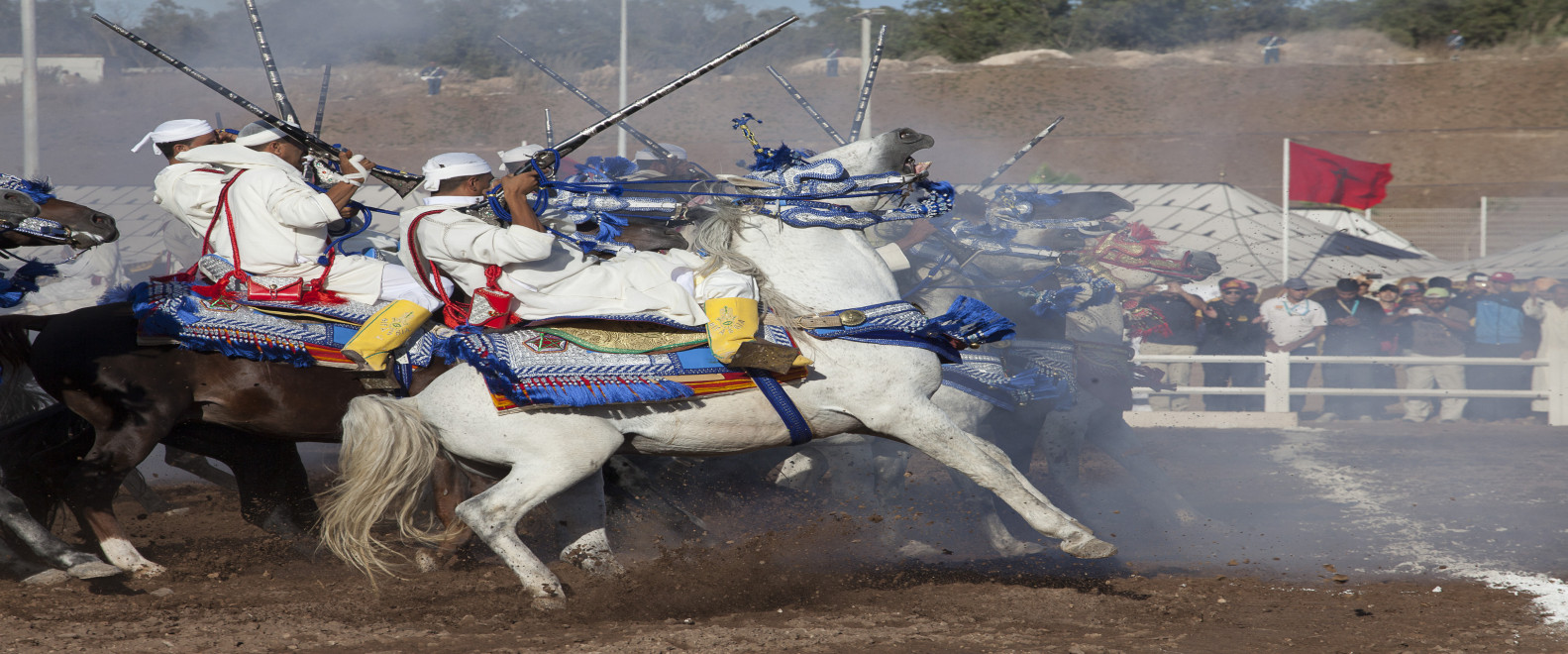
Watch how the riders keep their line and how the group moves together. You do not need to identify every costume or regional style to appreciate that coordination. If you want a cultural explanation, ask whether the event offers an interpreter or guide rather than assuming that admission includes one.
Where can you see Tbourida in October 2026?
A confirmed opportunity is the Salon du Cheval d'El Jadida, October 13–18, 2026, at the Parc d'exposition Mohammed VI in El Jadida. This is outside Marrakech: attending needs its own transport and accommodation decision.
The organiser's French programme lists afternoon Tbourida sessions from 15:00 to 18:00 across those dates. It schedules competition rounds on October 13–16, the final on Saturday October 17 and an exhibition on Sunday October 18. Recheck the programme before arranging travel, since events can change.
Use the organiser's linked ticket information for admission. Daytime entry and separately ticketed evening shows are not interchangeable. Confirm which ticket covers the session you want, any seating conditions and accessibility directly with the organiser. Its pages give different general closing times, so this guide does not promise one.
These dates are for 2026, not a permanent annual timetable. Do not assume that a future edition will take place on the same weekdays.
What about moussems and other festivals?
Tbourida can be associated with community celebrations and equestrian events, but a place name or last year's travel article is not a confirmed programme for your visit. Before adding a moussem or another festival to your route, obtain a current organiser announcement with the date, venue and public admission arrangements.
Ask these questions before committing:
- Is a Tbourida session actually scheduled on the day you can attend?
- Is it a competition, exhibition or staged entertainment?
- Where is the public viewing area, and is seating included?
- What happens if the programme changes or a session is cancelled?
- How will you get back to your accommodation after the event?
If an event cannot be confirmed, keep your itinerary flexible rather than building a paid transfer around an assumed annual date.
Is a Marrakech dinner show the same experience?
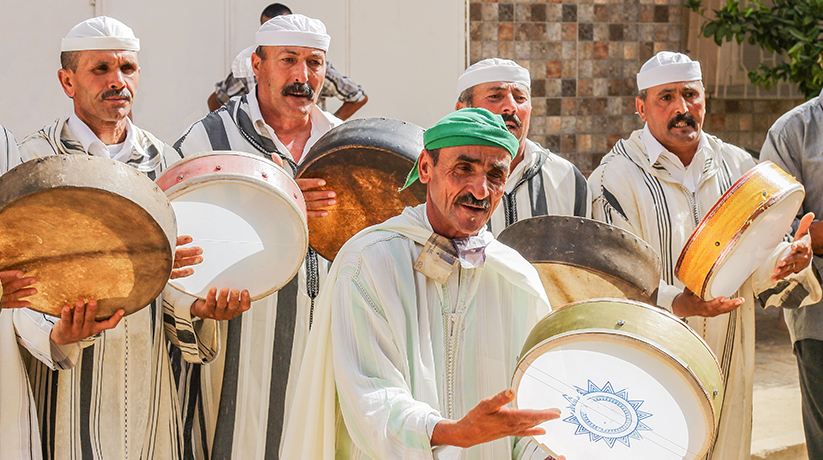
Not necessarily. A dinner-show listing may include several kinds of entertainment, and its programme can vary. Ask the venue what is performed that evening and whether it is a Tbourida presentation; do not infer the format from a photograph or the word “Fantasia.”
A dinner venue may suit a traveller who wants an evening outing close to their accommodation. A dedicated competition may suit someone whose main interest is equestrian tradition. Neither should be sold as the other, and we do not promise a particular venue's current programme here.
Practical advice for watching
Stay in the designated public area and follow stewards' directions. Do not step onto the performance ground, approach a moving horse or cross a barrier for a photograph. Ask permission before photographing participants at close range, especially away from the arena.
The rifle discharge is loud. If noise sensitivity, children or a medical concern affects your decision, ask the organiser about the viewing conditions and consider appropriate hearing protection. This guide cannot certify a universal safe distance or guarantee suitability for every visitor.
Confirm shade, drinking-water access, toilets, steps and the walk from the drop-off point before booking if those details matter to your group. An outdoor arena is not automatically accessible, and a ticket does not necessarily reserve a seat.
UNESCO recognition describes cultural heritage; it is not certification of the welfare or safety conditions at every event. Choose an organiser who can answer practical questions, and raise any concern with event staff.
Fit the event into your Morocco route
For a short Marrakech stay, first compare the event location with your existing plans. An El Jadida event is not a local Marrakech attraction simply because both are in Morocco. Keep time for the journey and avoid assuming that a late session connects comfortably with an onward flight.
Browse tours from Marrakech for wider route ideas, or send your dates and the event you are considering to discuss whether it fits. This is a request to review an itinerary, not a guarantee of private performances or event tickets.
Tbourida FAQ
Definition, dates and booking questions for Morocco's equestrian tradition.
A Moroccan equestrian performance involving a ceremonial salute, a coordinated gallop and rifles firing blanks. UNESCO inscribed the tradition in 2021.
Filed under
Morocco Journal
Let's turn this story into your itinerary.
Turn the guide into a private cooking class, food tour, Medina walk, sidecar ride or balloon flight.
Continue reading
All stories →
Vintage Sidecar Tour of Marrakech: Routes, Cost & Practical Tips
Compare Marrakech vintage sidecar routes, ride times, prices and practical tips. Learn what to expect before choosing a private sidecar tour.

Moroccan Food and Drink: A Local's Guide to Tajine, Couscous, Pastilla & Mint Tea
Discover Moroccan food and drink, from tajine and couscous to pastilla, tanjia and mint tea, with local tips on what to order and where to eat.
What to Wear in Morocco: Marrakech, Desert, Coast & Atlas
A practical Morocco packing guide for Marrakech, the desert, Atlantic coast and Atlas Mountains — built around layers, footwear, weather checks and respectful choices.