
By Marrakech Riads & Tours guide team — Local Morocco travel specialists
Atlas Mountains Day Trip from Marrakech: Full Guide
Everything you need to plan atlas mountains excursions from marrakech — Imlil, Ourika, Setti Fatma, Berber lunch, mule treks, seasonality tips and licensed guides.

The moment you leave Marrakech heading south, the city dissolves and the land takes over. Within ninety minutes the streets are gone, replaced by terraced barley fields, walnut groves, and the first white ridgelines of the High Atlas. Atlas mountains excursions from Marrakech are the single most rewarding day out our guests take — and the one that surprises them most, because the scale of what you find so close to the city is hard to picture from a rooftop terrace in the medina.
This guide covers everything you need to plan the trip right: which route to choose, what you will actually see and do, how the mountain seasons work, and why a licensed local guide changes the experience completely.
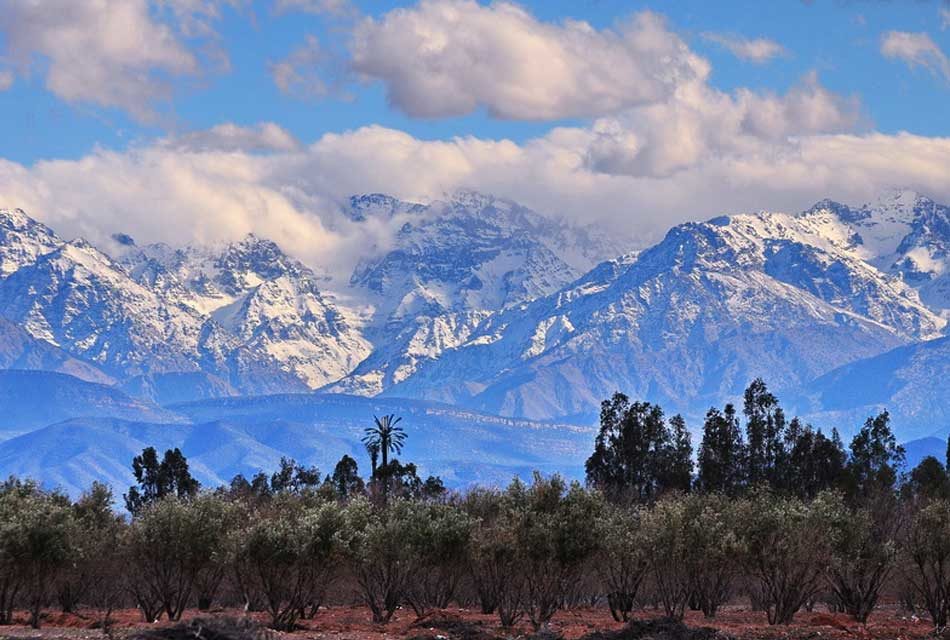
Choosing your route: Imlil or Ourika?
Two main valleys define most atlas mountains day trips from Marrakech. They start from the same southern highway, branch apart after about 45 minutes, and offer meaningfully different experiences.
Imlil and the Toubkal foothills
Imlil sits at 1,740 metres, roughly 90 minutes south of Marrakech, and it is the base camp for North Africa's highest peak — Mount Toubkal at 4,167 metres. You do not need to climb Toubkal to have an exceptional day here. The village itself is a cluster of stone houses on a river terrace, surrounded by terraced fields and walnut orchards, with trails fanning out in every direction.
A typical full-day itinerary from Marrakech runs like this: arrive in Imlil mid-morning, walk or ride by mule up the trail toward the Toubkal National Park entrance, pass through the Berber hamlet of Aroumd, take a tagine lunch in a local home with mountain views, then descend in the afternoon and return to Marrakech before dinner. The whole loop involves three to five hours of gentle walking — nothing technical, nothing requiring fitness training.
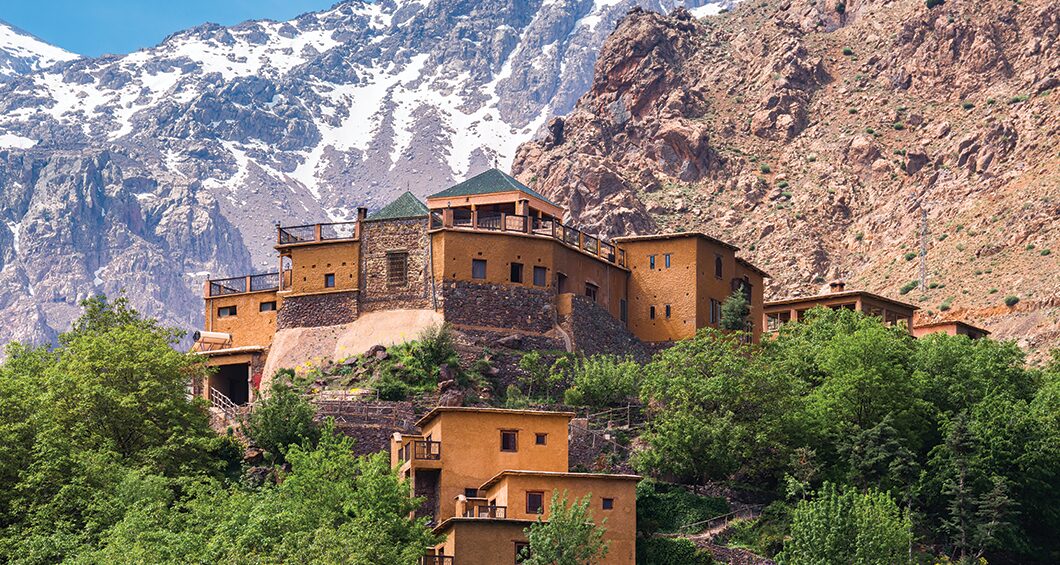
Kasbah du Toubkal, perched on a spur above Imlil, is the most dramatic viewpoint in the valley. Even if you are not staying there, the short climb to the kasbah terrace is worth every step.
Ourika Valley and Setti Fatma waterfalls
The Ourika Valley runs southeast from Marrakech and is the gentler of the two routes — greener, wider, with the Ourika River threading the valley floor the whole way. Small Berber villages line both banks, and on Mondays the weekly souk brings the valley to life with farmers, spice sellers and weavers trading in a clearing by the road.
The valley road ends at Setti Fatma, a tourist village at 1,500 metres. Behind it, a well-worn trail climbs past tea houses to a series of seven waterfalls tucked into a rocky gorge. The first two falls are a 20-minute walk from the village — accessible for most travellers. The upper falls require a scramble and a head for heights.
Ourika is the right choice if you are travelling with young children, have limited mobility, or simply want a beautiful mountain valley without any serious walking commitment.
The mule trek option
One of the most memorable parts of an Imlil day trip is the mule trek — hiring a mule and handler to carry you or your bags up the mountain trails. It is not a gimmick. The trails to the upper villages are steep and rocky, the mules are sure-footed and calm, and the handlers — all local Berber men who have been walking these paths since childhood — provide a window into the rhythm of mountain life that a car and a tour bus cannot replicate.
A typical mule hire for the day runs between two and four hours of riding, with the handler setting the pace and pointing out landmarks. Children love it. It is also the standard way that goods — gas canisters, building materials, food — reach the villages above the road. You are using the mountain's actual infrastructure.
Berber home tagine lunch
Lunch on an Atlas mountains day trip is not an afterthought. Eating in a Berber home is often what guests remember longest. A local family prepares a slow-cooked tagine over charcoal — lamb with preserved lemon and olives, or chicken with caramelised onions — served with fresh-baked bread, olive oil, and a pot of sweet mint tea. You eat on cushioned benches in the front room of a stone house, looking out at the valley you just walked through.
This kind of lunch is only possible through a local guide with genuine connections in the valley. When we arrange Atlas excursions for our guests, the lunch is with a family we know, not a staged "tourist meal" at a roadside restaurant. The difference is immediately obvious.
Half-day vs full-day
| Format | Duration | Best for |
|---|---|---|
| Half-day Ourika | 4–5 hrs from Marrakech | Families, first Atlas taste, limited time |
| Full-day Ourika + Setti Fatma | 7–8 hrs | Waterfalls walk, valley souk, relaxed pace |
| Full-day Imlil + mule trek | 8–9 hrs | Walkers, Berber home lunch, Toubkal foothills |
| Full-day Imlil + overnight | 2 days | Kasbah stay, sunrise over the Atlas, longer trails |
A half-day is enough to get a feel for the mountains and satisfy the curiosity most travellers arrive with. A full day — especially at Imlil with the mule trek and Berber lunch — is a genuinely different experience that most of our guests say was the highlight of their Morocco trip.
Seasonality: when to go and what to expect
The High Atlas is 10 to 15°C cooler than Marrakech at any time of year. In the heat of July and August, this is the point — the mountains are a 90-minute escape from a city that can hit 42°C. In November through April, the upper valleys carry snow on the peaks and sometimes on the trails themselves, which transforms the landscape and requires proper layering.
| Season | Conditions | What to Know |
|---|---|---|
| Nov – Apr | Snow on peaks, 5–12°C in Imlil | Bring warm layers. The snow scenery is spectacular. Some upper trails may require crampons in deep winter. |
| Mar – May | Green valleys, wildflowers, 12–18°C | Best overall season — lush, mild, trails clear. |
| Jun – Aug | Hot in the valley, 18–25°C at Imlil | Great escape from Marrakech heat. Trails dusty but clear. |
| Sep – Oct | Clear skies, cooling, 14–20°C | Excellent light, harvest season, quieter trails. |
Spring (March to May) is the most spectacular time to be in the Atlas. The meltwater fills the rivers, the walnut and almond trees are in blossom, and the terraced fields are a patchwork of young barley and clover against limestone ridgelines still holding patches of snow.
What to wear and bring
- Layers, always. Even in summer, mornings in Imlil can be cool. A light fleece or packable down jacket takes no space and matters.
- Comfortable walking shoes with grip. The mountain trails are rocky and uneven. Trainers are fine for Ourika; trail shoes are better for Imlil.
- Sun protection. At altitude, UV is intense even when the air feels cool. Sunscreen, sunglasses and a hat.
- A light rain layer in spring — afternoon showers arrive quickly in the Atlas.
- Water. We include it on all private day trips, but always carry a bottle independently.
- Cash in dirhams for any personal purchases at the souk or village shops. Card acceptance is limited in the mountains.
For a region-by-region packing approach that also covers Marrakech, the desert and Atlantic coast, use our what to wear in Morocco guide alongside the current forecast and your guide's route advice.
Why a licensed local guide makes the difference
The Atlas mountains are not a theme park with signposted paths and visitor centres. The trails between villages are unmarked and easy to confuse. The mountain communities — predominantly Amazigh (Berber) speaking — interact very differently with a knowledgeable local guide than with a stranger arriving from a hire car. The lunch is different. The welcome is different. The things you learn about the mountain life you are passing through are simply not available without someone who belongs to it.
Beyond the experience, there is a practical point: licensed guides in Morocco are nationally certified by the Ministry of Tourism. An unlicensed tout can legally walk you to the valley entrance and not a step further into the national park. A licensed guide can take you anywhere — and knows where to go.
Our tours from Marrakech pair every Atlas excursion with a licensed mountain guide and a private driver. If you are comparing options, that combination — private, licensed, locally connected — is the benchmark to hold everything else against.
For a broader comparison of all the best excursions out of Marrakech, see our day trips from Marrakech guide, which ranks nine trips by what they actually deliver.
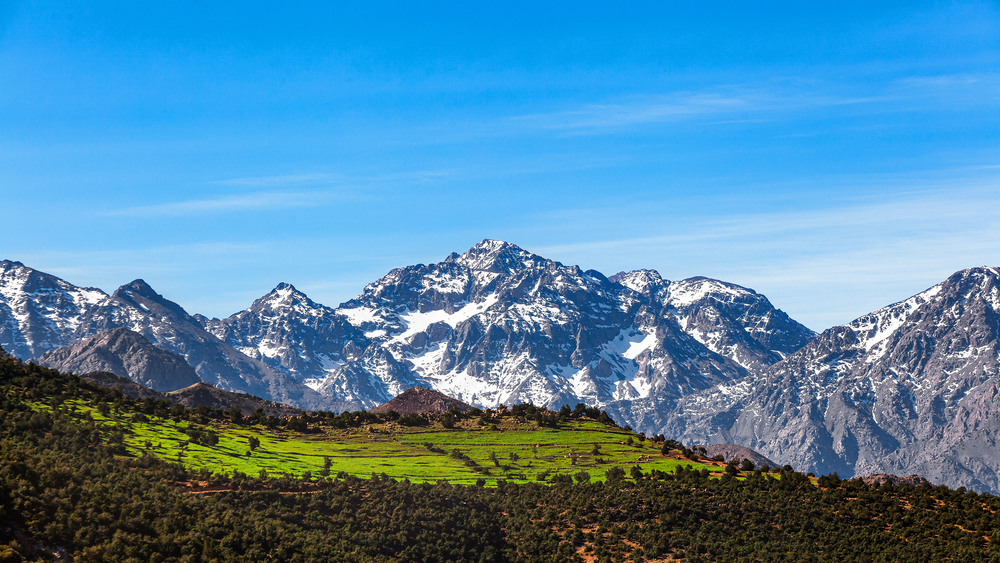
How to get to Imlil and Ourika from Marrakech
Both valleys are reached by driving south from Marrakech on the N9 / Route de l'Ourika. The Ourika Valley road branches east after about 35 km; the Imlil road continues further south toward Asni and then climbs a side valley.
- Imlil: 65 km, approximately 90 minutes by private car. No direct public bus to the village.
- Ourika / Setti Fatma: 65 km on the valley road, approximately 60–70 minutes. Shared minibuses (No. 56 from Bab er-Rob) serve the valley but drop you at various points, not at the trailhead.
For a day trip that actually works — with time for the walk, the lunch and the views — a private transfer with your guide is the only practical option. Shared taxis and buses eat two to three hours of your day in waiting and stop-start loading.
Browse our Marrakech guided tours to see how we structure private mountain days, or contact us directly to tell us your dates.
Ready to plan your Atlas mountains day trip? Tell us your travel dates and a licensed Marrakech-based guide will send you a free, tailored itinerary within 24 hours — private driver included, no markup, no obligation.
Atlas Mountains day trip from Marrakech — FAQ
The questions travellers ask us most when planning an Atlas mountains excursion from Marrakech.
The Ourika Valley (Setti Fatma) is about 60–70 minutes by private car. Imlil, the main trailhead for the Toubkal foothills, is roughly 90 minutes. Both are south of Marrakech on the same main road before branching into separate valleys.
Filed under
Morocco Journal
Let's turn this story into your itinerary.
See private day trips and multi-day routes from Marrakech, planned with licensed local guides.
Continue reading
All stories →Ourika Valley Day Trip from Marrakech: Worth It?
Ourika Valley is Marrakech's closest Atlas escape — green river gorge, Setti Fatma waterfalls, a Monday Berber souk, and riverside cafés just 1 hour south.

Agafay Desert from Marrakech: Sunset & Camp Guide
Agafay desert day trip from Marrakech: 45 min away, sunset camel rides, quad biking, luxury Berber camps & dinner under stars. Full guide from licensed local guides.

Day Trips from Marrakech: 9 Best Excursions (2026)
The 9 best day trips and excursions from Marrakech, ranked by what they actually deliver — Atlas Mountains, Agafay, Ourika, Essaouira, Aït Ben Haddou, Ouzoud and the Sahara. Distances, timings, best seasons and which to skip, from a Marrakech-based agency.