
By Marrakech Riads & Tours guide team — Local Morocco travel specialists
Ourika Valley Day Trip from Marrakech: Worth It?
Ourika Valley is Marrakech's closest Atlas escape — green river gorge, Setti Fatma waterfalls, a Monday Berber souk, and riverside cafés just 1 hour south.

On a hot Marrakech afternoon in July, the medina sits at 40°C and the air above the souks shimmers. Forty-five minutes later you are sitting at a café table set directly in a cold mountain river, your feet in the current, watching the valley climb through terraced gardens toward snow-streaked peaks. That is the Ourika Valley — and it is one of the best things you can do on a day trip from Marrakech.
The Ourika Valley is the Atlas escape that Marrakchis themselves use. Not the tourist version of the Atlas — a bumpy road to a viewpoint — but a real inhabited valley where Berber families have farmed the riverbanks for centuries, where the weekly souk still draws traders from remote hillside villages, and where the seven-tiered Setti Fatma waterfalls are reachable by anyone who can manage a 45-minute walk. It is the closest true mountain landscape to Marrakech: just over an hour south, entirely different in character from the city, and genuinely refreshing in every season.
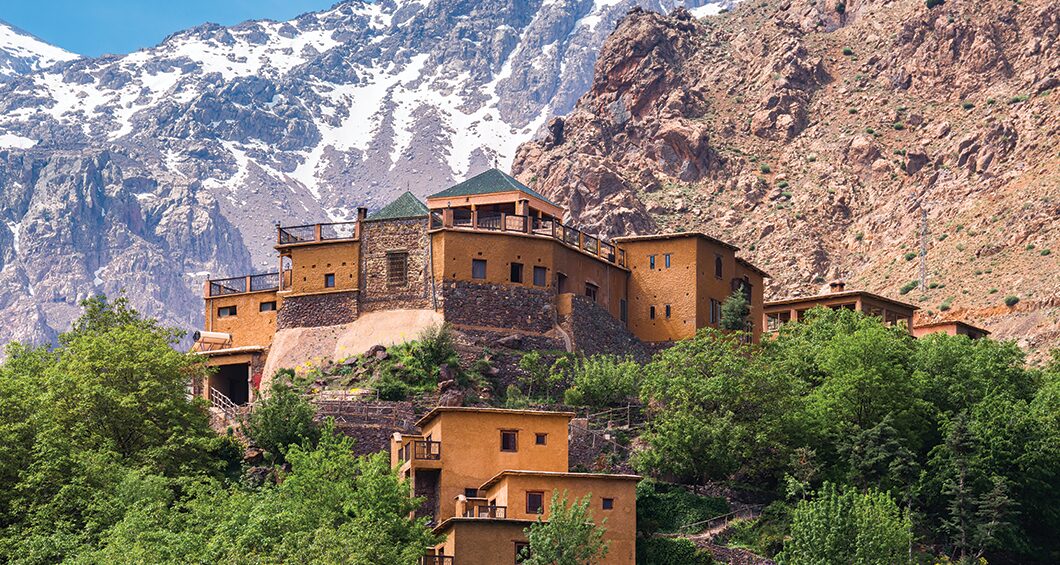
Ourika Valley quick facts
| Distance from Marrakech | ~68 km / approx. 1 hour by road |
| Valley altitude | 1,000–1,500 m at Setti Fatma |
| Best months | March–June, September–November |
| Best day to go | Monday (Berber market day) |
| Setti Fatma hike | 45 min each way, moderate, stone path |
| Half-day or full day? | Half-day possible; full day recommended |
| Families with children? | Excellent — easy terrain, river access |
Why Ourika is worth it
The usual framing for the Ourika Valley is "easy day trip" — which undersells it. The valley is worth a full day for three reasons that are hard to replicate elsewhere near Marrakech.
First, the river. The Oued Ourika runs cold and clear from snowmelt high in the Atlas, and the cafés along the valley floor have been putting tables directly in it for decades. Eating a tagine with your feet in a mountain stream, looking up at peaks still carrying snow well into April, is an experience specific to this valley and available nowhere else within an hour of Marrakech.
Second, Setti Fatma. The village at the head of the accessible valley is the gateway to seven waterfalls stacked up the gorge behind it. The first waterfall is a relaxed 45-minute walk on a clear stone path; reaching the upper falls takes another hour or two and involves scrambling on rock. Most visitors — including families with older children — get to waterfall two or three and turn back satisfied. The mist from the upper cascades keeps the air cool even at the height of summer.
Third, the living valley. The Ourika is not a set piece. Villages cling to terraces above the river. Women in bright djellabas walk the road between them. The Monday Berber souk at Tnine Ourika, roughly 30 km up the valley, draws traders from deep in the mountains — silver jewellery, fresh produce, spices, live animals — and is one of the few roadside markets that still feels genuinely local rather than staged for visitors.
The Setti Fatma waterfalls in detail
Setti Fatma is the end-of-road village at approximately 1,500 metres. Parking is at the village edge; from there a stone path follows the river upstream into a narrowing gorge. The first waterfall — the largest, with a pool at its base — is where most visitors stop. On a hot day, the pool is crowded with local families swimming. Continue up the same path for the second and third falls, which require more scrambling but reward you with solitude and better views.
The hike to the first waterfall is suitable for families with children over 5 provided they are confident on uneven stone. The upper falls require surefootedness and are best in dry weather — the rocks become slippery after rain.
What to wear: Sturdy trainers or walking shoes (sandals are not adequate beyond the first waterfall). Light layers — the gorge is significantly cooler than the valley floor. Wear clothing that can get wet if you wade in the pool.
What to bring: Water (though cafés sell it en route), sunscreen for the open sections, and cash for the café lunch. If you want to reach falls three or four, allow a full morning.
The Monday Berber souk at Tnine Ourika
If your visit falls on a Monday, schedule it around the weekly market at Tnine Ourika, approximately 35 km from Marrakech. This is one of the last roadside souks in the Atlas foothills where commerce has not been redesigned for tourists. Stalls sell saffron from Taliouine, fresh walnuts from valley gardens, hand-woven blankets in the muted palette of natural dyes, and Berber silver jewellery traded down from mountain villages.
The souk runs from early morning and winds down by noon — arrive before 10 a.m. for the best atmosphere. Our guides speak Tachelhit (Berber) and Darija, which makes a real difference when you want to buy something at an honest price rather than a tourist price.
The argan cooperative question
The road from Marrakech to the Ourika Valley passes a gauntlet of roadside stalls advertising "argan cooperatives." Most of them are not cooperatives. They are privately owned shops paying our industry's familiar 30% guide commission to anyone who steers a tourist van through the door. The argan oil is real; the "cooperative" designation is often not.
There is a genuine women's argan cooperative in the valley with transparent pricing and certified origin — our guides know which one it is and can take you there if argan products interest you. The difference is visible immediately: the women are actually working the press, prices are posted, and there is no pressure.
Half-day vs full-day: which is right for you?
Half-day (morning, return by 1 p.m.): Feasible if your only goal is the valley scenery and river cafés. Leave Marrakech at 8 a.m., drive the valley to Aghbalou, have coffee with your feet in the river, return by 1 p.m. You will not reach Setti Fatma. Good for guests with afternoon commitments.
Full day (recommended): Leave at 8:30 a.m. Stop at the Monday souk if the day is right. Reach Setti Fatma by 11 a.m. Walk to the first two waterfalls, swim if the season allows. Tagine lunch at a riverside café. Drive back down the valley slowly, stopping at any village that catches your eye. Back in Marrakech by 5 p.m. This is the version that sticks in people's memories.
Combining with Imlil or the Atlas: The Ourika road and the Imlil road both head south from Marrakech but diverge — you cannot efficiently do both in a single day. If your priority is walking in the mountains, our Atlas Mountains day trip from Marrakech covers Imlil and Mount Toubkal's foothills. If your priority is valley scenery and waterfalls, Ourika is the better choice.

When to visit the Ourika Valley
Spring (March–May) is the finest season. The river runs full from snowmelt, the terraced fields are green, almond and cherry trees blossom in April, and temperatures in the valley sit between 18–24°C. The waterfalls are at their most powerful.
Summer (June–August) is when the valley is most popular with Marrakchis escaping the heat. The river is lower but still running; the falls are still impressive; temperatures at Setti Fatma sit around 25–28°C versus 38–42°C in the city. Weekends are crowded — go on a weekday.
Autumn (September–November) brings excellent clarity of light, uncrowded roads, and walnut and pomegranate harvests. The Berber souk is particularly well-stocked.
Winter (December–February) can bring snow to the upper valley. Setti Fatma is accessible most days but the upper waterfalls may be icy. The valley is beautiful under snow and almost empty of visitors — worth considering if you don't mind cold.
What to wear
| Season | Marrakech at departure | Setti Fatma (1,500 m) |
|---|---|---|
| March–April | 18–22°C | 10–15°C, possible rain |
| May–June | 28–35°C | 20–25°C |
| July–August | 35–42°C | 25–28°C |
| September–October | 25–32°C | 18–22°C |
| November–February | 12–20°C | 5–12°C, possible snow |
In every season: bring a layer — the valley is 10–15°C cooler than the city. In spring and autumn: add a waterproof. In winter: a warm mid-layer is essential. Sturdy shoes always.
Is Ourika good for families?
Yes — it is one of our most family-friendly day trips from Marrakech. The river cafés delight children. The walk to the first waterfall is doable for most children over 5. The Monday souk is vivid and engaging at any age. There are no steep buses, no long walks through medina crowds, no sun-blasted ruins. The pace is flexible — you can stop whenever the river looks inviting.
For families with very young children, the lower valley (before Aghbalou) already delivers the river-café experience without any hiking. This can be a comfortable 3-hour outing.
Ourika vs other Atlas day trips from Marrakech
The Ourika Valley is one of several worthwhile excursions from Marrakech — our complete day trips from Marrakech guide covers all of them. Quick comparison for the Atlas options:
- Ourika Valley — valley scenery, waterfalls, Berber souk, families. Best introduction to the Atlas. No serious hiking required.
- Imlil / Atlas Mountains — trailhead village for Toubkal, mule walks, Berber home lunch. For guests who want to actually walk in the mountains.
- Agafay Desert — stone desert, camel rides, Atlas backdrop, sunset camps. For guests who want a desert experience closer to the city. See our tours from Marrakech for all options.
How we arrange the trip
Every Ourika Valley day trip we build is private: licensed local guide who speaks the valley's languages, driver with a comfortable vehicle, hotel pickup, one transparent quote. No roadside commission stops unless you specifically want the argan cooperative visit (the real one). No shared minibus where you wait for 16 other passengers.
Tell us your dates and group size on our contact page and we will send a tailored itinerary — including whether the Monday souk falls on your visit day — within 24 hours.
Ourika Valley day trip — FAQ
The questions we hear most before booking a trip to the Ourika Valley from Marrakech.
Yes — it is the closest genuine mountain landscape to Marrakech and the most refreshing day trip the city offers in summer. The combination of a cold mountain river, riverside cafés, the Setti Fatma waterfalls, and the Monday Berber souk makes it a full day with real variety. It is not the most dramatic Atlas scenery (that is Imlil or Toubkal), but it is the most accessible and the best for families.
Ready to plan your Ourika Valley day trip? Browse our tours from Marrakech or send us your dates — a licensed Marrakech-based guide will reply with a free tailored itinerary within 24 hours.
Filed under
Morocco Journal
Let's turn this story into your itinerary.
See private day trips and multi-day routes from Marrakech, planned with licensed local guides.
Continue reading
All stories →Atlas Mountains Day Trip from Marrakech: Full Guide
Everything you need to plan atlas mountains excursions from marrakech — Imlil, Ourika, Setti Fatma, Berber lunch, mule treks, seasonality tips and licensed guides.

7-Day Morocco Itinerary from Marrakech (Atlas+Sahara)
The definitive 7-day Morocco itinerary from Marrakech: medina, Atlas Mountains, Aït Ben Haddou, Dades Gorge, Merzouga Sahara camp, and back — private, paced, and local-guided.

Agafay Desert from Marrakech: Sunset & Camp Guide
Agafay desert day trip from Marrakech: 45 min away, sunset camel rides, quad biking, luxury Berber camps & dinner under stars. Full guide from licensed local guides.