
By Marrakech Riads & Tours guide team — Local Morocco travel specialists
Moroccan Food and Drink: A Local's Guide to Tajine, Couscous, Pastilla & Mint Tea
Discover Moroccan food and drink, from tajine and couscous to pastilla, tanjia and mint tea, with local tips on what to order and where to eat.

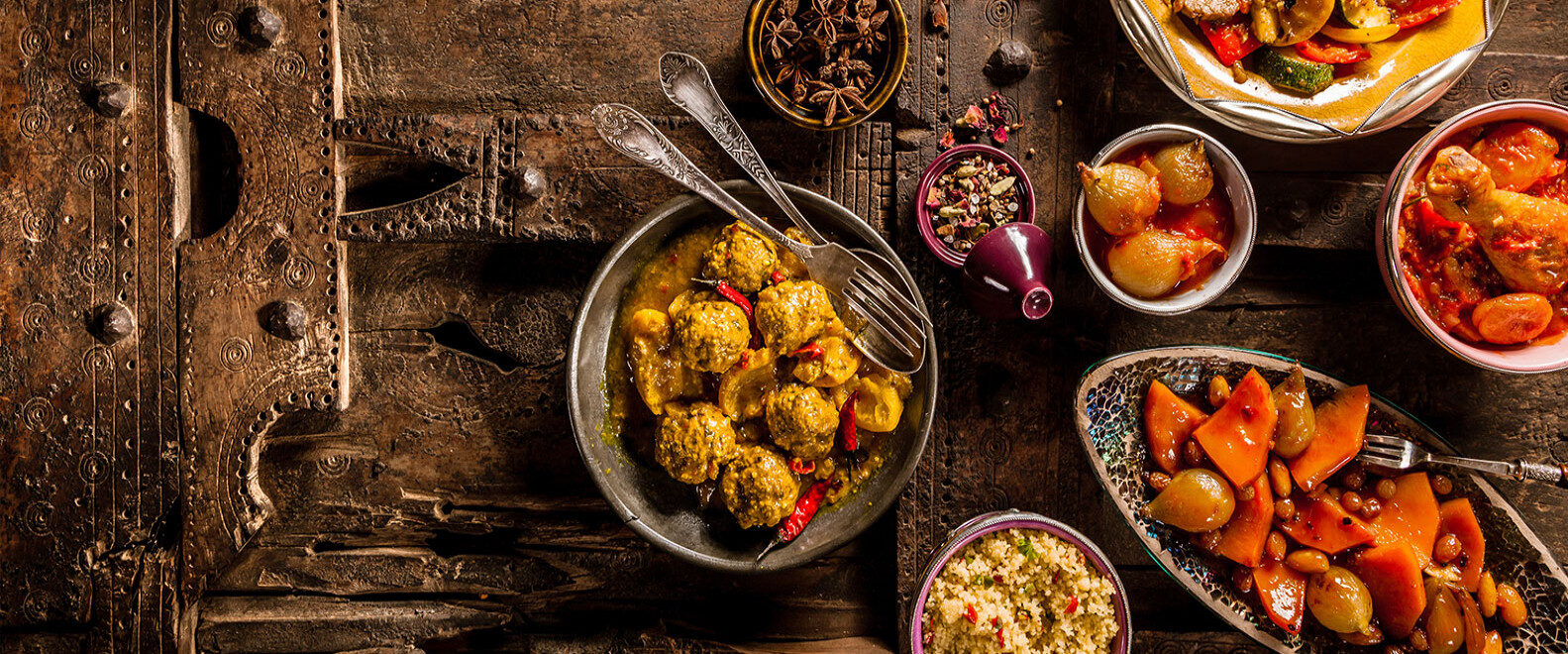
Moroccan cuisine consistently ranks in the top 5 in the world. La Liste — the French rival to Michelin — places more than 15 Moroccan restaurants in its global top 1,000. The country is one of only three in the world (alongside France and Mexico) whose food culture is on the UNESCO Intangible Cultural Heritage List.
But here's the thing nobody tells you before your first trip: the food you'll eat in a Moroccan home is completely different from what tour-bus restaurants serve. This guide is what we tell our own guests — the dishes worth seeking out, where to find the real version, and a few honest warnings.
How Moroccans actually eat
Three quick context points that change how the rest of this guide makes sense:
- One shared plate. Most home meals are eaten from a single communal dish, with bread used as cutlery. You scoop only from your "wedge" in front of you — never reach across.
- Friday is couscous day. Most Moroccan families eat couscous on Fridays after midday prayer. Order it any other day in a restaurant and locals will quietly tell you it's tourist-tier.
- Tea is the meal, not the closer. Mint tea isn't dessert — it's served before food (as welcome) and during food (with sweet pastries). After dinner most Moroccans drink water or coffee.
The 8 dishes to actually try
1. Tajine
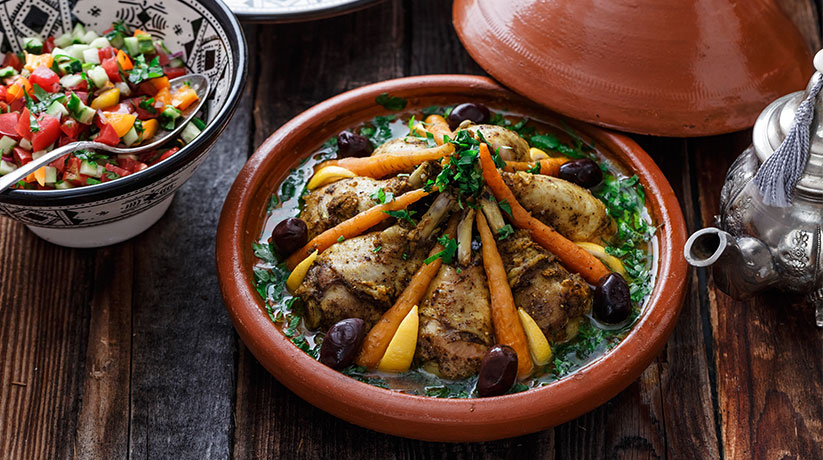
The name refers to the conical clay pot, not the dish inside. The pot's tall cone traps steam so meat braises in its own juices over 2-4 hours — no added water.
Order regionally:
- Marrakech / Souss: chicken with preserved lemon and green olives
- Atlas Mountains: lamb with prunes and almonds (sweet-savoury)
- Atlantic coast (Essaouira, Safi): monkfish or sardine tajine with chermoula
- Fez: beef with quince and saffron
Skip restaurants that serve tajine in under 30 minutes — it's pre-cooked and reheated. The real version takes 2+ hours.
2. Couscous
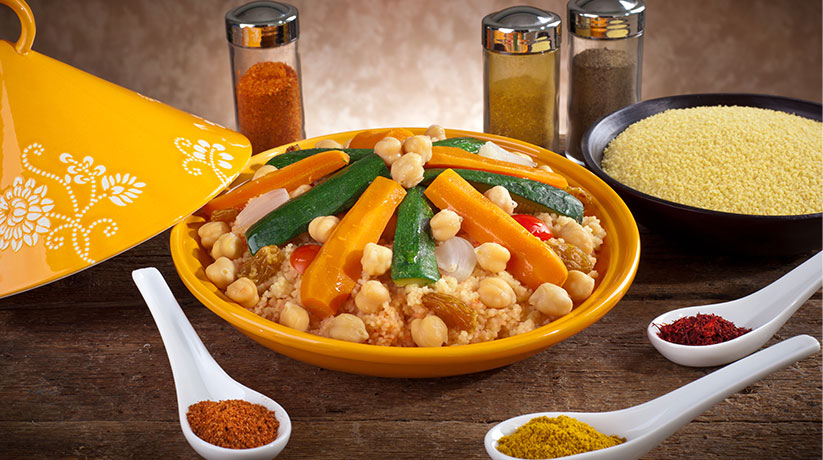
The dish so culturally important that UNESCO listed it (jointly with Algeria, Tunisia and Mauritania) in 2020. Hand-rolled semolina steamed three separate times until each grain stays separate.
Variants:
- Couscous with seven vegetables (the Friday classic — squash, turnip, carrot, cabbage, zucchini, tomato, chickpeas)
- Couscous Tfaya (sweet version with caramelised onions, raisins, cinnamon)
- Couscous Belboula (made with barley instead of semolina — Berber Atlas specialty)
3. Pastilla
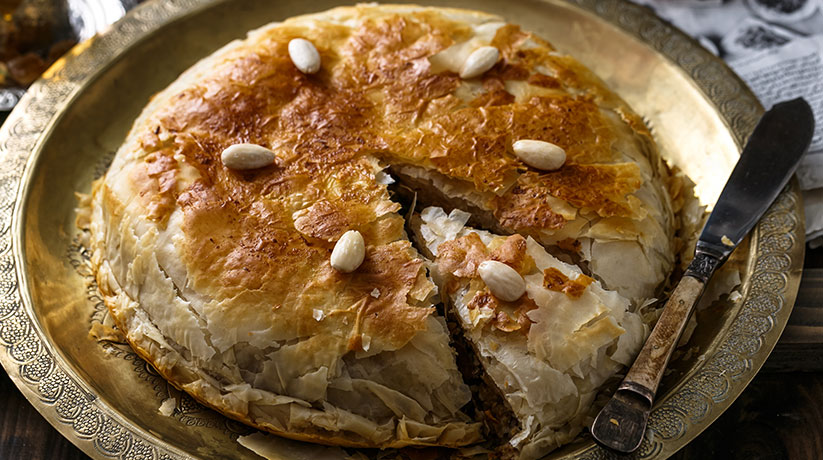
The most architecturally complex dish in the cuisine — paper-thin warqa pastry, layered with shredded poultry, almonds, eggs, cinnamon and sugar. Sweet AND savoury, traditionally made with pigeon but now usually chicken. Seafood pastilla in Essaouira is a coastal variant worth trying.
4. Tanjia
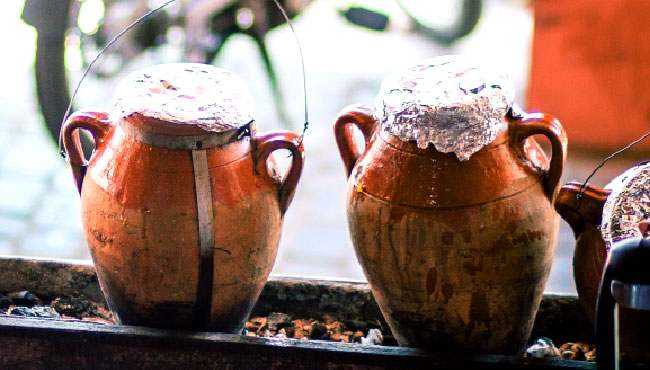
The dish Marrakech invented. A terracotta urn (also called tanjia) filled with lamb shank, garlic, preserved lemon, saffron and ras el hanout, then sealed with parchment and buried in the embers of the public hammam furnace for 6-8 hours. The hammam workers are the original Tanjia chefs — they tend the embers anyway.
Hard to find in restaurants. We arrange it as a private dinner experience for guests on multi-day Marrakech stays.
5. Harira
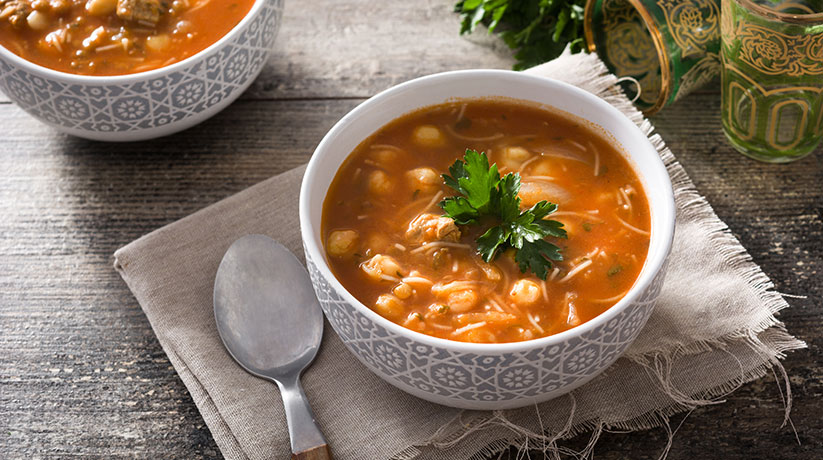
Tomato-and-pulse soup with lamb, chickpeas, lentils, fresh coriander and a flour-thickened broth. Eaten to break the Ramadan fast every evening for a month. Available year-round in restaurants but reaches another level during Ramadan when families perfect their recipes for 30 nights running.
6. R'fissa
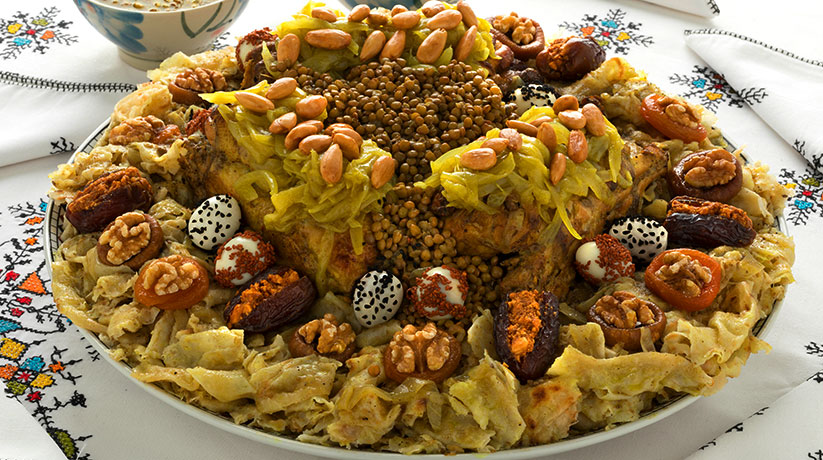
Casablanca's most iconic dish — flaky msemen pancakes torn by hand, layered with chicken, lentils, fenugreek and a broth that takes 4 hours to simmer. Traditionally served to new mothers in the days after childbirth. Order it if you see it on a menu.
7. Mechoui
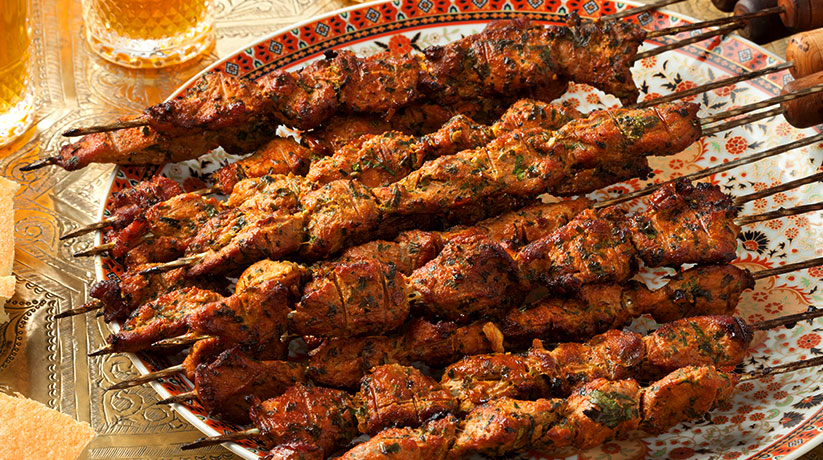
Whole spit-roasted lamb, slow-cooked over wood-coal embers in a pit oven for 6-7 hours until the meat falls apart at a touch. Most authentic at roadside mechoui stalls in Marrakech medina and at moussem festivals across the south.
8. Briouates
The small, crispy filo triangles served at every dinner table. Sweet (almond paste, honey) or savoury (minced lamb, cheese, prawns).
The pastries you can't skip
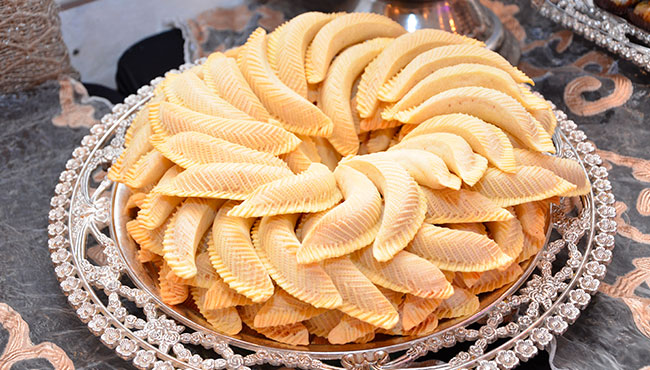
- Kaab el Ghazal (Gazelle Horns) — almond paste crescents perfumed with orange-flower water. The wedding pastry.
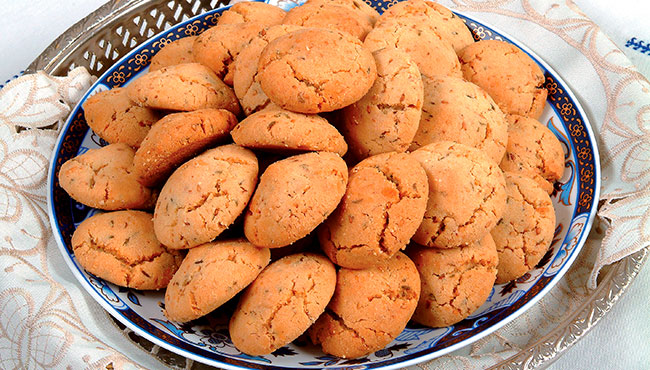
- Ghriba — short cookies of almond, sesame or coconut. Crisp outside, melt inside.
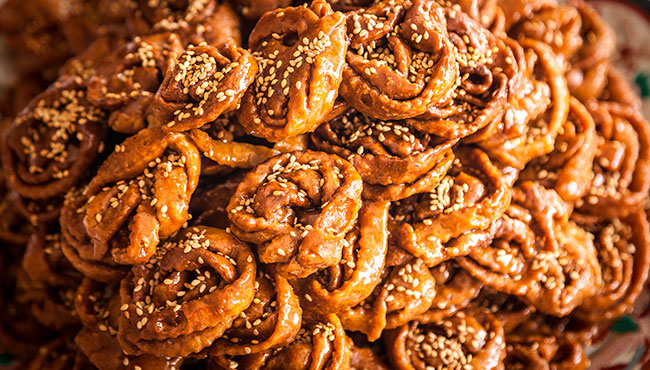
- Chebakia — flower-shaped fried dough soaked in honey and sesame. The Ramadan pastry.
- Sellou (Sfouf) — toasted flour, sesame and almond powder, bound with honey. Not a pastry exactly, but eaten by the spoonful — the most addictive thing in Moroccan kitchens.
- Beghrir — semolina pancakes with hundreds of small holes for catching butter and honey. Breakfast staple.
What to drink
Mint Tea
"Moroccan whisky" — green tea, fresh spearmint and a startling amount of sugar, poured from a height of 30+ centimetres to aerate the surface foam. Refused tea = refused friendship. Three pours from the same pot at a traditional gathering, each a different strength:
- First: "as bitter as life"
- Second: "as strong as love"
- Third: "as sweet as death"
Coffee
Coffee is taken seriously in Morocco — French press tradition meets North African spice. Order:
- Café noir — espresso strength
- Café cassé — espresso with a splash of milk (literally "broken coffee")
- Café au lait — half coffee, half steamed milk (Moroccan breakfast standard)
Fresh juices
The Jemaa el-Fna square in Marrakech has 20+ juice carts where you can custom-blend orange, pomegranate, banana, almond milk, and seasonal fruits. 15 MAD (€1.40) for a large glass. Avoid carts without visible ice or running water — pick one with high foot traffic.
Avocado smoothie
A Moroccan signature you won't find elsewhere — avocado, milk, honey, almonds, dates and orange-flower water blended thick. Served at juice stalls and traditional cafés.
What to avoid
- Camel milk sold to tourists in the Sahara — fine if from a known source, but stick to known camps.
- Tap water anywhere — drink bottled or filtered. Your stomach will thank you.
Where to eat — by city
Marrakech
- Mechoui Alley (off Jemaa el-Fna) — lamb mechoui, 100 MAD per generous serving
- Stall 14 at Jemaa el-Fna (after sunset) — best harira in the medina, 5 MAD a bowl
- Le Jardin (Mouassine) — modern Moroccan in a restored riad, garden setting
- Nomad (Place Rahba Kedima) — rooftop, contemporary takes on classic dishes
- Dar Yacout (closed Mondays) — the splurge dinner, multi-course in a palace
Fez
- Restaurant Numero 7 (Fes Jdid) — Moroccan-modern, one of La Liste's Moroccan picks
- The Ruined Garden (Talaa Sghira) — perfect lunch in an open-air ruined courtyard
- Café Clock — camel burger if you must, but go for the storyteller nights
Essaouira
- The Port Fish Grills (line of identical wooden shacks) — point at your fish, eat it grilled 15 minutes later. The single best food experience on the Atlantic coast.
Book a Moroccan food experience
Want to taste it firsthand? We run two food-focused experiences in Marrakech:
- Marrakech food tour with a local chef — 8 stops, 4 hours, Jemaa el-Fna after dark
- Marrakech cooking class at a riad and farm — buy the ingredients at the souk, cook tajine and pastilla in a riad
Or build food stops into your tour. Contact us — we'll plan the meals around what you want to eat, not what tour buses want to feed you.
Moroccan food FAQ
Is Moroccan food spicy? Aromatic, not spicy. Cumin, cinnamon, ginger, saffron, paprika, ras el hanout (a 27-spice blend) — but very little chili heat. Harissa is optional and Tunisian-influenced.
Is Moroccan food vegetarian-friendly? Yes. Zaalouk (eggplant), bissara (fava bean soup), vegetable couscous, vegetable tajine, every starter spread — most easily eaten vegetarian. Vegan is harder because of dairy-heavy pastries and butter-laden tajines.
Can I eat street food safely? Yes, with sense. Pick stalls with high turnover (locals queueing), avoid raw salads, watch food being cooked in front of you. Jemaa el-Fna stalls are inspected daily.
What's the tipping etiquette at restaurants? Round up. 5-10% in tourist restaurants, leave 5-10 MAD coins at a café. Many places now include service — check the bill.
Filed under
Morocco Journal
Let's turn this story into your itinerary.
Turn the guide into a private cooking class, food tour, Medina walk, sidecar ride or balloon flight.
Continue reading
All stories →
Tbourida: The Thundering Equestrian Art of Morocco (UNESCO Cultural Heritage)
See Morocco's Tbourida horse tradition: where festivals take place, when to go, what the musket ceremony means and practical tips for watching it.

Marrakech, Meet the Unexpected: A Local's Guide to the Red City
A Marrakech-based travel agency's guide to the Red City — medina, Gueliz, Hivernage, Palmeraie — what to do, what to skip, where to escape the crowds and what only locals know.

Vintage Sidecar Tour of Marrakech: Routes, Cost & Practical Tips
Compare Marrakech vintage sidecar routes, ride times, prices and practical tips. Learn what to expect before choosing a private sidecar tour.