
By Marrakech Riads & Tours guide team — Local Morocco travel specialists
Chefchaouen: A Local's Guide to Morocco's Blue City (2026)
Planning Chefchaouen from Marrakech? Understand the blue city's northern location, regional transport options, overnight stays and ways to fit your route.

Morocco's blue city is Chefchaouen, in the Rif mountains in northern Morocco — not near Marrakech. If your trip starts in Marrakech, treat it as a northern itinerary leg rather than a quick out-and-back excursion. Fes, Tangier and Tetouan are more natural regional approaches, as the Moroccan National Tourist Office's Chefchaouen guide explains.
The useful question is whether you can give the blue medina time without sacrificing the rest of your route. We recommend an overnight stay when possible, so the visit includes an evening and a morning rather than only a midday stop. Below are the regional access options and the places to consider once you arrive.
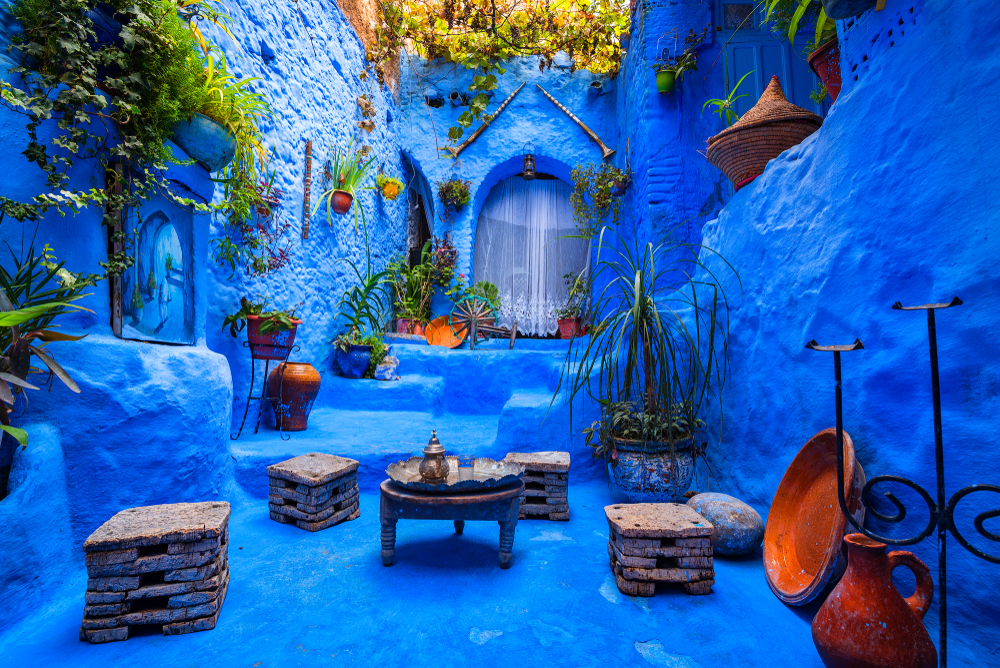
Why is Chefchaouen blue?
There is no single answer — only theories that everyone in the medina will defend with equal certainty.
- The Jewish heritage theory. Sephardic Jews who fled the Spanish Inquisition settled in Chefchaouen in the 15th century and brought with them the tradition of painting buildings blue, a colour associated in Kabbalistic teaching with the sky and the divine. The Jewish population peaked at ~5,000 before emigration to Israel in the 1940s-50s. The buildings stayed.
- The mosquito theory. Some locals will tell you the blue keeps insects away. There is little scientific evidence — but the lime-wash itself does help.
- The cool-temperature theory. Light blue reflects sunlight in the hot Rif summers and keeps interior rooms cooler than the typical Moroccan terracotta.
Whatever the truth, the colour is repainted every spring by residents (with municipal-supplied lime and indigo pigment), and the look of the medina is now protected by city regulation. You can't paint your house any other colour without a permit.
A two-minute history
Chefchaouen was founded in 1471 by Moulay Ali ben Moussa ben Rashid el-Alami as a defensive base against Portuguese invasions from the coast. Hence the name — "Chefchaouen" comes from the Berber word for "horns" (the two mountain peaks above the city). The city stayed closed to non-Muslims for almost 400 years — Christians caught inside the walls before the Spanish protectorate of 1920 risked execution. The Spanish presence (1920-1956) is still visible: tapas-style restaurants, Spanish street signs, and "Plaza Uta el-Hammam" instead of an Arabic square name.
When to visit Chefchaouen
The Rif sits at 600 metres and is markedly cooler and wetter than Marrakech or the Sahara.
- Spring: consider walking and photography, with layers for changing conditions.
- Summer: plan around heat and busy visiting periods rather than assuming quiet lanes.
- Autumn: compare your dates and daylight with the rest of your northern itinerary.
- Winter: allow for rain and cooler conditions; wet slopes and steps need care.
Check the forecast close to departure. Seasonal descriptions are not a temperature guarantee.
The two-hour golden window from sunrise gives you the bluest medina you'll ever see, with almost no tour groups. Most buses arrive from Fes around 11 a.m. and leave by 4 p.m. — be on the walls before then.
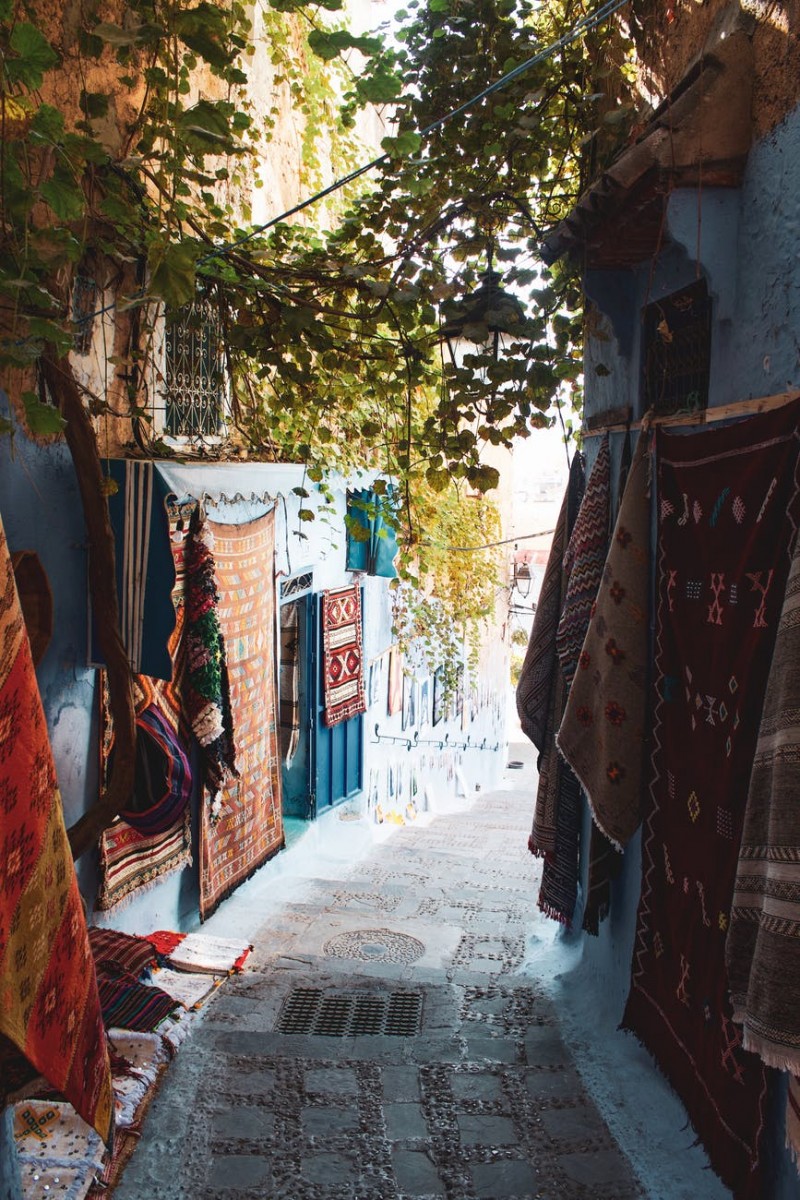
The best blue alleys (and the ones to skip)
Three streets get 90% of the Instagram traffic, but Chaouen is more interesting once you wander off them.
The famous three
- Rue Bin Souaq — the staircase framed by ceramic pots. Worth seeing at 7 a.m.; nightmare at 11.
- Plaza Uta el-Hammam — the main square with the kasbah and the Grand Mosque. Sit at a café, do not eat there.
- Ras el-Maa waterfall — a 10-minute walk uphill where local women still wash clothes in the cold mountain spring. Best in late afternoon when the light slants through the trees.
The hidden corners (where locals live)
- Hay El Andalous — the steep upper neighbourhood. The further you climb above Plaza Uta el-Hammam, the more cats, fewer tourists, and the deeper the blues.
- The Spanish Mosque path — the trail starts at Ras el-Maa and climbs 30 minutes to the abandoned Spanish-era mosque. Best sunset viewpoint in Chefchaouen. Bring water.
- Rue Bachir — long, lantern-hung blue street north of the kasbah, rarely photographed.
- The kasbah's interior garden — small admission fee (10 MAD), Spanish-era prison cells, and a museum of Riffian crafts.
- Place el-Majzen — the open square where night football matches happen. Watch one if you can.
Where to eat
Most guidebook recommendations are tourist traps. Locals eat here:
- Café Restaurant Beldi Bab Souk — the working café where the wool dyers actually have lunch. Tajines for 50-70 MAD (€5-7).
- Restaurant Bab Ssour — the splurge spot for tagine in a converted dar. 150-200 MAD per person.
- Aladdin (on Plaza Uta el-Hammam) — touristy but the rooftop terrace view is unbeatable for an evening mint tea.
- Casa Hassan — French-influenced Moroccan, good for vegetarians.
- Sandwich Khouikhna (near the bus station) — the best harira soup in town for 6 MAD. Locals only.
- Goat cheese stalls in the souk — Chefchaouen's specialty. Pair with fresh bread from a clay oven.
Where to stay
Chefchaouen has no five-star international hotels — and that is part of its charm. The city is built almost entirely of family-run dars (small townhouses) and riads (courtyard houses) converted into 4-10-room guesthouses.
Three tiers to choose from:
- Budget (€25-50/night): family-run guesthouses near Plaza Uta el-Hammam. Most have rooftop breakfast areas.
- Mid-range (€70-130/night): boutique dars with painted-tile bathrooms, hot water, terrace breakfast. Best value tier.
- Splurge (€150-280/night): hillside boutique riads with view over the entire blue town. Lina Ryad & Spa and Dar Echchaouen are the two consistent picks.
For our guests we book inside the medina (so you wake up in the blue) but with terraces high enough to see Jebel el-Kelaa. See our broader where to stay in Morocco guide for the riad / hotel / kasbah breakdown.
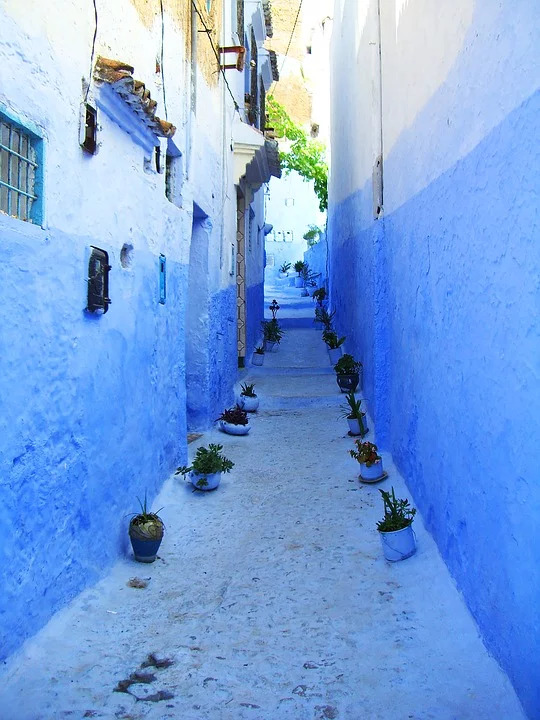
Day hikes from Chefchaouen
Two genuinely worthwhile trails most travellers never hear about:
Akchour Waterfalls (full day)
A 30-minute drive from Chefchaouen to Akchour village, then a 3-hour hike along the river to the Cascades d'Akchour — twin waterfalls in a forested gorge. Lunch at a riverside café (grilled trout, mint tea), then either return or continue 2 hours uphill to the God's Bridge natural rock arch.
Jebel el-Kelaa (full day, fit hikers)
The peak directly above Chefchaouen, 1,616 metres, 4-5 hours up, 2-3 hours down. The view from the summit takes in the Rif range, the Mediterranean coast on a clear day, and Chefchaouen 1 km below you. Hire a local guide (300-500 MAD/day) — the trail isn't always obvious.
How to get to Chefchaouen
There is no airport in Chefchaouen. The town is reached overland, and the route you choose makes a real difference:
- Fes: about 3 hours 25 minutes; combine the blue city with a Fes-based northern leg.
- Tangier: about 2 hours 10 minutes; consider when arriving in or continuing through northern Morocco.
- Tetouan: about 1 hour 25 minutes; a nearby regional approach, subject to actual transport arrangements.
These rounded estimates come from ONMT, checked October 6, 2026. They are not coach timetables or guaranteed transfer durations; pickup location, traffic and stops change the journey. For Marrakech or Casablanca, request a complete intercity route with realistic breaks rather than extrapolating these regional times.
Compare our Northern Morocco Discovery tour if you want Chefchaouen within a wider northern itinerary rather than a separate return journey.
Is the blue city near Marrakech?
No. Chefchaouen is in the Rif in northern Morocco; Marrakech is much farther south. A Marrakech-based visitor should allow for a substantial intercity journey and overnight planning, not mistake it for a local day trip.
Start with your arrival and departure cities. A route continuing towards Fes or Tangier may fit better than returning to Marrakech solely for a flight. We have not verified a direct Marrakech–Fes flight for your dates, so do not build the itinerary around that assumed connection. Send your dates and departure deadline to discuss the route before booking separate transport.
How long do you need?
One full day and one night for the medina essentials. Arrive in the afternoon, watch sunset from the Spanish Mosque viewpoint, sleep in a medina riad, photograph the alleys at 7 a.m., then leave.
Two nights if you want to do the Akchour waterfalls hike — most travellers underestimate this and end up rushing the photogenic morning. Two nights = relaxed.
Three+ nights if you're a hiker tackling Jebel el-Kelaa or a photographer who wants multiple sunrise sessions.
Photographer's cheat sheet
- Be on the walls by 6:45 a.m. in summer, 7:30 a.m. in winter. The medina lanes face south-east — they glow from sunrise to about 9:30 a.m.
- Ask before photographing women, children and shopkeepers. Many Chaouenis are uncomfortable with cameras. A friendly salam and a small purchase changes the conversation.
- Avoid the painted-pot staircases at midday — jammed shoulder-to-shoulder with day-trippers.
- Pack a polariser. The blue walls can blow out under direct sun; a polariser brings back the texture of the lime-wash.
- Use the local cats. Chefchaouen has more cats than any town in Morocco. They're patient subjects and perfectly framed against blue walls.
- The kasbah garden after lunch — sun moves over the wall, you get half-shadow / half-light on the building. Underrated shot.
What to avoid in Chefchaouen
- Buying kif (cannabis). The Rif is Morocco's cannabis-growing region and dealers will approach you. It's illegal in Morocco — penalties range from heavy fines to prison. Decline politely and walk on.
- The "free guide" who attaches himself to you near the bus station. He will steer you to specific carpet shops and take a 30% commission.
- Booking only a day trip from Fes. You arrive at peak crowd time, leave before sunset, miss the whole point.
- Underestimating the journey from Marrakech. Plan overnight stops and rest breaks. Compare a northern route with a return trip before committing; do not assume a direct flight connection.
Build your Chefchaouen trip
We design Chefchaouen visits as part of Northern Morocco circuits — pairing the blue city with Fes, Meknes, Volubilis and Tangier — paced so you arrive at the right time of day, not the wrong one.
- Existing Northern Morocco Discovery tour — 7-day package with full Chefchaouen stay
- Imperial Cities tour — can add Chefchaouen as an extension
- Contact us for a tailored quote within 24 hours
Chefchaouen FAQ
Quick answers to the questions travellers ask us most about Morocco's Blue City.
Yes — if you stay overnight. As a day trip it's a wasted journey: you arrive at peak crowds and leave before the magic hour. One night transforms it.
Filed under
Morocco Journal
Let's turn this story into your itinerary.
Compare Marrakech riads by neighbourhood and travel style, then ask our local team for a tailored shortlist.
Continue reading
All stories →
10-Day Morocco: Marrakech, Fes & Chefchaouen
The definitive 10-day Morocco itinerary: Marrakech, Atlas, Sahara dunes, Fes medina & Chefchaouen blue city — paced, private, and arranged by licensed local guides.

Marrakech to Sahara: 3-Day Merzouga Desert Guide
Your complete guide to a 3-day Sahara desert tour from Marrakech — Erg Chebbi dunes, camel trek, desert camp, and the route that makes it worth the drive.
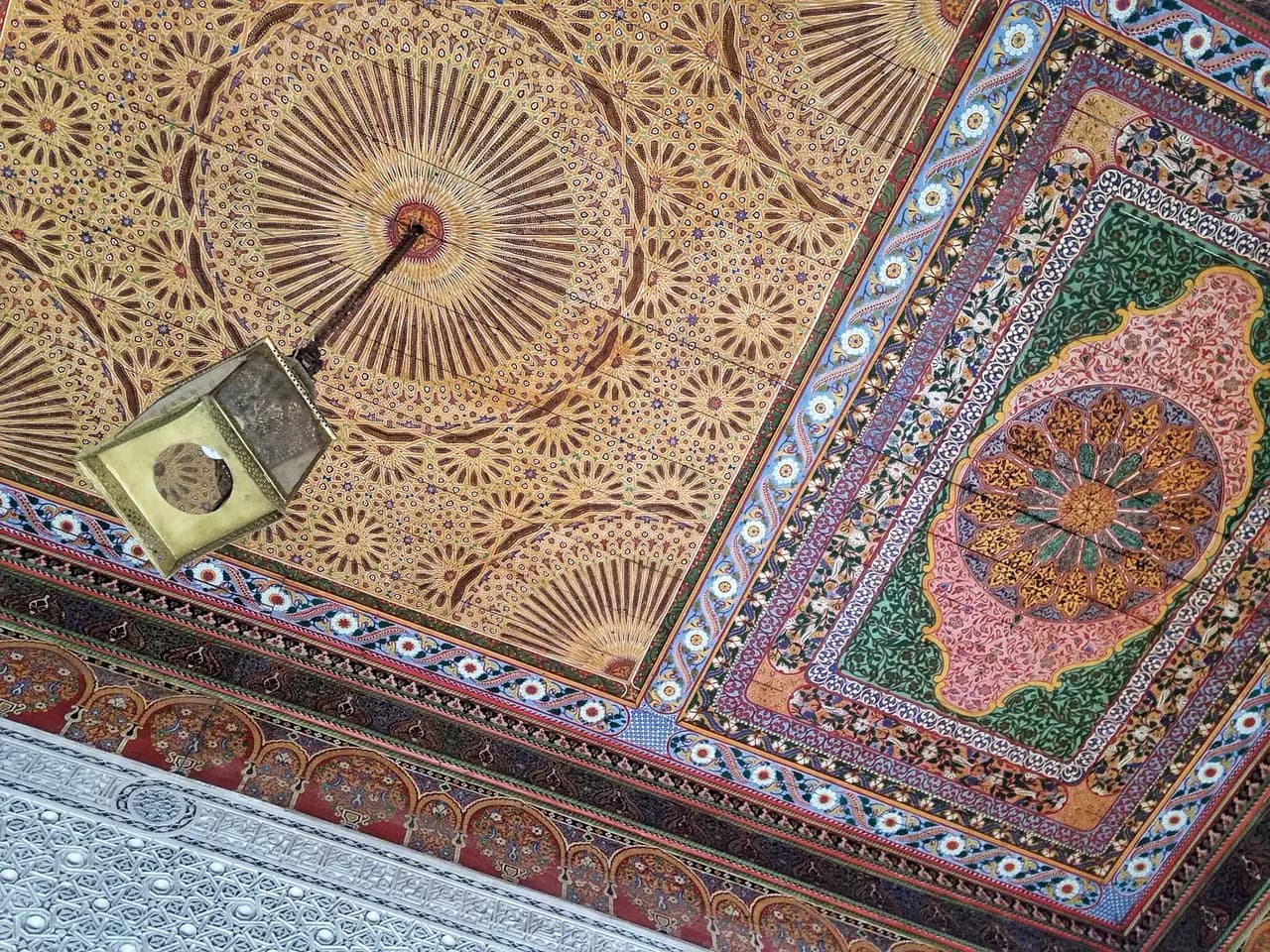
Marrakech in 3 Days: A Realistic First-Timer Itinerary
Plan three full days in Marrakech with a walkable medina route, Bahia Palace, Majorelle, proper breaks and clear advice on what to book and what to skip.