
By Marrakech Riads & Tours guide team — Local Morocco travel specialists
Surfing Taghazout: A Local's Guide to Morocco's Atlantic Surf Capital
A Marrakech-based travel agency's guide to surfing Taghazout — the best surf breaks, when to visit, surf schools, where to stay, and how to combine a surf trip with Marrakech and the Sahara.

Taghazout is the unlikely centre of Moroccan surf culture — a former fishing village of 1,200 people perched on a basalt cliff 19 km north of Agadir, where the Atlantic delivers some of the most consistent right-hand point breaks in the world. Anchor Point. Killer Point. La Source. Boilers. Mysteries. Banana Beach. If you've watched any surf film about North Africa, you've seen waves filmed within 30 km of this town.
This is the guide we hand to every guest who asks about combining surf with the rest of their Morocco trip — the best breaks by skill level, when to come, the right surf school, where to stay, and how to slot Taghazout into a 10-day Marrakech-and-Atlas itinerary.
Why Taghazout
Three Atlantic features stack up to make this stretch of coast unique:
- A continental shelf that bends North Atlantic swells into perfect right-hand points at multiple sequential headlands south to north.
- Westerly winds offshore most mornings, blowing the wave faces clean and glassy until ~11 a.m.
- A 220-day-a-year surfing season — November to April for the big swell, May to October for mellower waves and warm water.
Add an inexpensive cost of living, a tight-knit local Berber community, surf schools at every skill level, and direct flights into Agadir (AGA) from most European cities — and you have the most accessible serious surf town on the African continent.
A short history
Taghazout was a 1,200-person fishing village until the 1960s, when American and Australian surfers — chasing rumours of "the Endless Summer" routes — pulled their VW vans up the coast road from Casablanca and discovered Anchor Point.
By the late 1970s the village had become a stop on the global surf trail. European van-dwellers would camp out at the headland for entire winters. They left boards, wetsuits, and a culture behind. The first local Moroccan to ride a board was a teenage Mustapha El Madkouri in 1981. Today his nephew runs one of the village's best surf schools.
The current generation of Moroccan pro surfers — most famously Ramzi Boukhiam (Olympic competitor, 2024 Paris) and big-wave specialist Othmane Choufani — all came up through this coast. The Moroccan Surfing Federation has its national training centre in Aourir, 10 km south.
The town's growth has accelerated sharply since 2020. Visitor numbers up 25% in three years. A multi-million-dollar resort development along the coast is now underway. The character will shift over the next decade — but as of 2026, Taghazout still feels like a surfer's village first, not a resort.
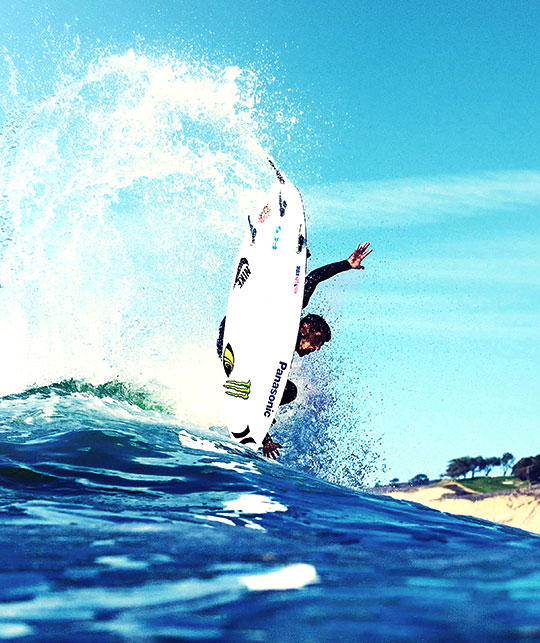
The surf breaks ranked by skill level
Beginners (you're learning to stand up)
- Banana Beach (Aourir) — protected sandy bay 10 km south of Taghazout. Where every surf school takes day-one students. Knee-to-waist-high mush waves.
- Crocodile Beach (Tamraght) — same southern stretch, slightly more reef but still beginner-friendly at the south end.
- Plage des Nations (Imourane) — wide beach break 30 minutes north, friendliest for first-timers in summer.
Intermediate (you can paddle out, catch waves, do basic turns)
- Imsouane Bay — the longest right-hand point in Morocco, an hour north of Taghazout. 2-3 minute rides on a good day. Cult favourite.
- Devil's Rock — between Taghazout and Aourir, mellow right-hander over a sand-rock bottom.
- Hash Point — directly off Taghazout's main beach. Crowded but accessible.
Advanced (you live for double-overhead reef breaks)
- Anchor Point — Morocco's most famous wave. A long, peeling right-hander over a shallow reef. The wave that put Morocco on the surf map. Holds size up to 12 feet.
- Killer Point — heavy, hollow right-hander a few hundred metres further out. Pros only on big days.
- Boilers — fast, shallow reef section. Best at 4-6 feet.
- Mysteries — the wave that paid for half the houses in the village. Powerful, mechanical, breaks over sharp reef. Big-wave days only.
- La Source — left-and-right peak just off the cliff. Trickier paddle out.
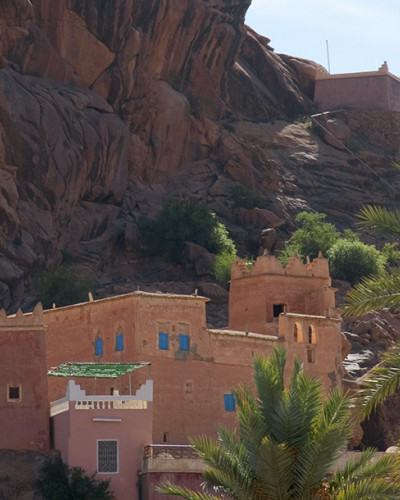
When to surf in Taghazout
| Season | Wave size | Crowds | Water temp | Best for |
|---|---|---|---|---|
| November–March | 4–12 ft, all major breaks firing | Busiest (peak season) | 17–19°C (wetsuit) | Advanced, big-wave surfers |
| April–May | 3–6 ft, consistent | Medium | 18–20°C | All levels, balanced |
| June–August | 1–4 ft, mellow | Lighter | 19–22°C | Beginners, families |
| September–October | 3–7 ft, building swell | Light, "secret season" | 20–22°C | All levels, less crowded |
Pro tip: the September to mid-October "secret season" is when most experienced surfers we send to Taghazout come back saying it was perfect — warm water, consistent waves, no crowds.
Where to sleep in Taghazout
Three accommodation tiers cover almost every traveller:
Surf hostels (€15-40/night)
Multi-bunk dorms with shared kitchens, board storage, sunset rooftops. Most run all-inclusive surf-and-stay packages. Examples: Surf Berbere, Surf Maroc Auberge, The Spot House. Best for solo travellers, backpackers and budget surf weeks.
Surf camps + boutique guesthouses (€60-160/night)
Mid-tier rooms with private bathrooms, half-board, board hire, group lessons. Surf Maroc Villa Mandala, Dar Surf, Taghazout Surf Spot. Best for couples and small groups, balance of comfort and surf-village vibes.
Resorts (€200-700/night)
Hyatt Place Taghazout Bay, Fairmont Taghazout Bay, and several Atlantic-cliff villas. Pool, full spa, fitness centre, multiple restaurants. Suited to non-surfing partners and families.
For golfers travelling with non-surfing partners, Tazegzout Golf (Kyle Phillips design) is on the cliff above Taghazout — see our golf in Morocco guide.
Best surf schools in Taghazout
- Surf Maroc — the original (founded 2003), British-Moroccan run, multiple bases. Tightest instruction for total beginners.
- Original Surf Morocco — Berber-owned, local-led, smaller groups, deep cultural integration. Our usual pick for guests.
- Dar Surf — Aourir-based, family-run, intimate atmosphere.
- Magic Bay Surf Camp — Tamraght-based, mid-tier, good for intermediates wanting to progress.
Typical packages: 3-hour group lesson €40-50, half-day private lesson €80-110, 5-day camp with board + accommodation €350-650.
Beyond surfing — what else to do in Taghazout
- Argan oil cooperatives — Tighanimine and other women's cooperatives in the Souss Massa region. The oil is produced almost exclusively in this part of Morocco. 1-hour tour + tasting, €5-10.
- Paradise Valley — 45 minutes inland, freshwater pools at the foot of the Anti-Atlas. Day-trip hike + swim.
- Souk in Aourir (Wednesdays) — the regional weekly market. Spices, leather, vegetables, the works.
- Yoga + reformer pilates — the village has half a dozen well-run studios. Most surf hostels include classes.
- Hammam in Tamraght — at €5-15 a session, this is the cheapest hammam experience in Morocco.
How to combine Taghazout with the rest of Morocco
The 3-hour drive between Marrakech and Taghazout (or the 45-min flight RAK → AGA) makes Taghazout an easy add-on to almost any Morocco itinerary. We typically build it in two ways:
Surf + Marrakech (7-10 days)
- Days 1-3 Marrakech medina + Majorelle (see Exploring Marrakech)
- Days 4-7 Drive to Taghazout. Surf lessons, sunsets, hammam, argan cooperative
- Days 8-10 Either return Marrakech or fly out from Agadir
Surf + Marrakech + Sahara (12-14 days)
- Days 1-3 Marrakech base
- Days 4-6 Sahara loop (see Road of the Kasbahs)
- Days 7-12 Taghazout surf week
- Days 13-14 Buffer / Essaouira day
Build your Taghazout surf trip
We arrange surf-and-stay packages year-round with our preferred surf schools and accommodation — all-inclusive (board, wetsuit, instruction, breakfast, dinner) for guests who want a turnkey week.
- For surf-only: contact us for a tailored 5-7 day Taghazout package
- For surf + Marrakech: pair with our Marrakech guided tours
- For surf + Sahara: see tours from Marrakech and extend
Taghazout surf FAQ
What first-time surfers and seasoned travellers ask before booking Taghazout.
No. The town has dozens of beginner-focused surf schools and protected beginner beaches (Banana Beach, Crocodile Beach). Many guests come never having stood on a board and leave able to surf small waves.
Filed under
Morocco Journal
Let's turn this story into your itinerary.
Explore private Morocco itineraries and ask our local team to tailor the route to your dates and travel style.
Continue reading
All stories →
Best Time to Visit Morocco: Month-by-Month
Month-by-month guide to Morocco weather, seasons and regions — from Marrakech and the Sahara to the Atlas and Atlantic coast — so you pick the perfect time to visit.

Marrakech, Meet the Unexpected: A Local's Guide to the Red City
A Marrakech-based travel agency's guide to the Red City — medina, Gueliz, Hivernage, Palmeraie — what to do, what to skip, where to escape the crowds and what only locals know.

Day Trips from Marrakech: 9 Best Excursions (2026)
The 9 best day trips and excursions from Marrakech, ranked by what they actually deliver — Atlas Mountains, Agafay, Ourika, Essaouira, Aït Ben Haddou, Ouzoud and the Sahara. Distances, timings, best seasons and which to skip, from a Marrakech-based agency.